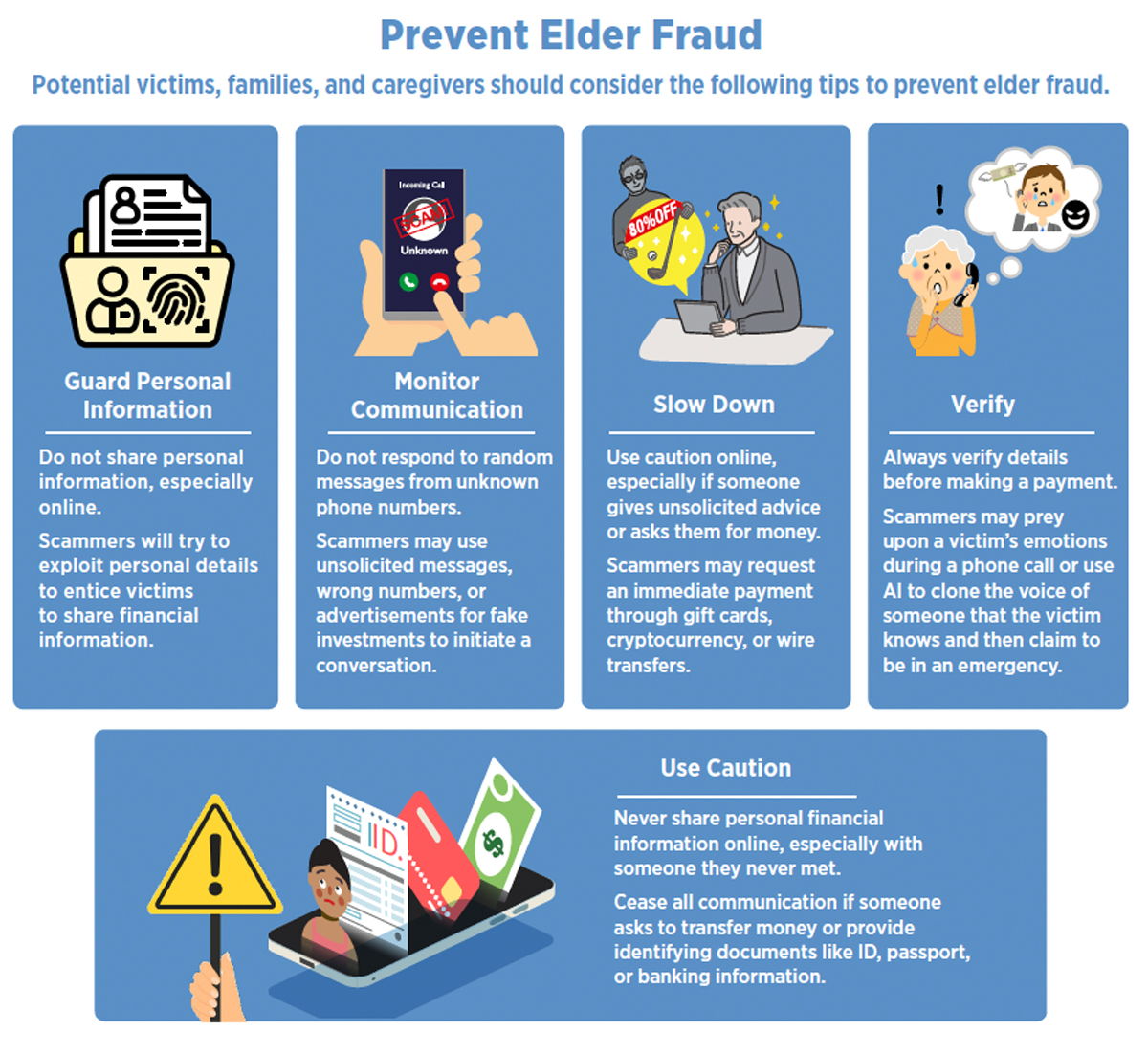
The United States Secret Service continues to observe a rise in fraud targeting adults over 60 (commonly referred to as elder fraud), as well as the tactics scammers use to perpetrate these crimes. Elder fraud leads to significant financial and emotional distress for victims of these crimes and their families. Scammers who commit elder fraud may use similar tactics to those used in other fraud schemes, such as investment fraud, tech support scams, government impersonation, or romance scams.
What is Elder Fraud?
Elder fraud is a scam targeting adults over the age of 60 in which attempts are made to deceive them with promises of goods, services, or financial benefits.
Government Impersonation
Scammers may pose as government employees and request urgent payments through debit cards, cash, cryptocurrency, or gift cards. This tactic may include threats of arrest, deportation, termination of benefits due to “unpaid taxes,” or a required payment because of an “outstanding bench warrant from missed jury duty.”
Tech Support Scams
Scammers may pose as a fake tech support employee and ask for permission to log into a victim’s device remotely to fix a “problem.” This tactic may result in requests for bank account information or credit card numbers to pay for their services.
Romance Scams
Scammers may create fake accounts on social media and online dating sites to entice victims and gain their trust. This tactic may result in escalating requests to pay for emergencies and travel expenses or requests to invest in a cryptocurrency scam. A scammer may make excuses to avoid chatting on video or meeting in person.
Investment Fraud
Scammers can make unsolicited texts, emails, and social media posts appear to be from a legitimate financial institution. These communications may offer a low-risk investment opportunity with guaranteed returns. However, this tactic may escalate into requests for personal information to “secure” an account, larger transfers, or “fees/taxes” to release funds. The requests may include threats of arrest due to unpaid bills.
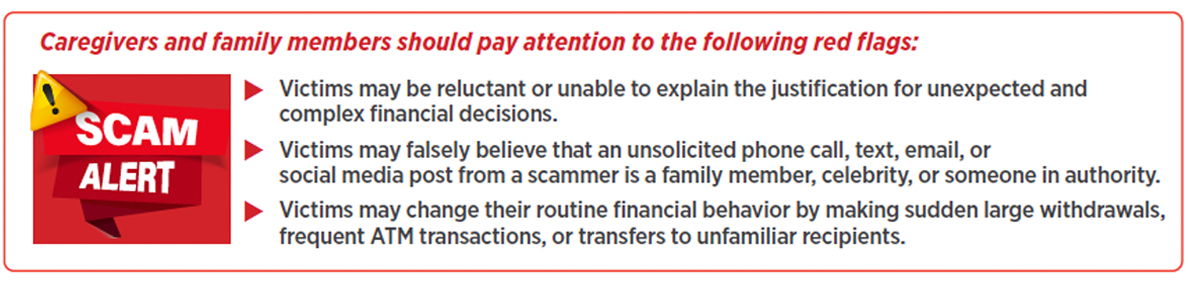
What to Do If You Know a Victim
Report elder fraud scams to your local law enforcement agency, the Federal Trade Commission at https://reportfraud.ftc.gov, and the Internet Crime Complaint Center at https://www.ic3.gov/.
The United States Secret Service works closely with federal, state, local, and tribal law enforcement agencies to investigate elder fraud and other types of financial crimes.
For more information visit https://www.secretservice.gov/investigations/elderfraud.